

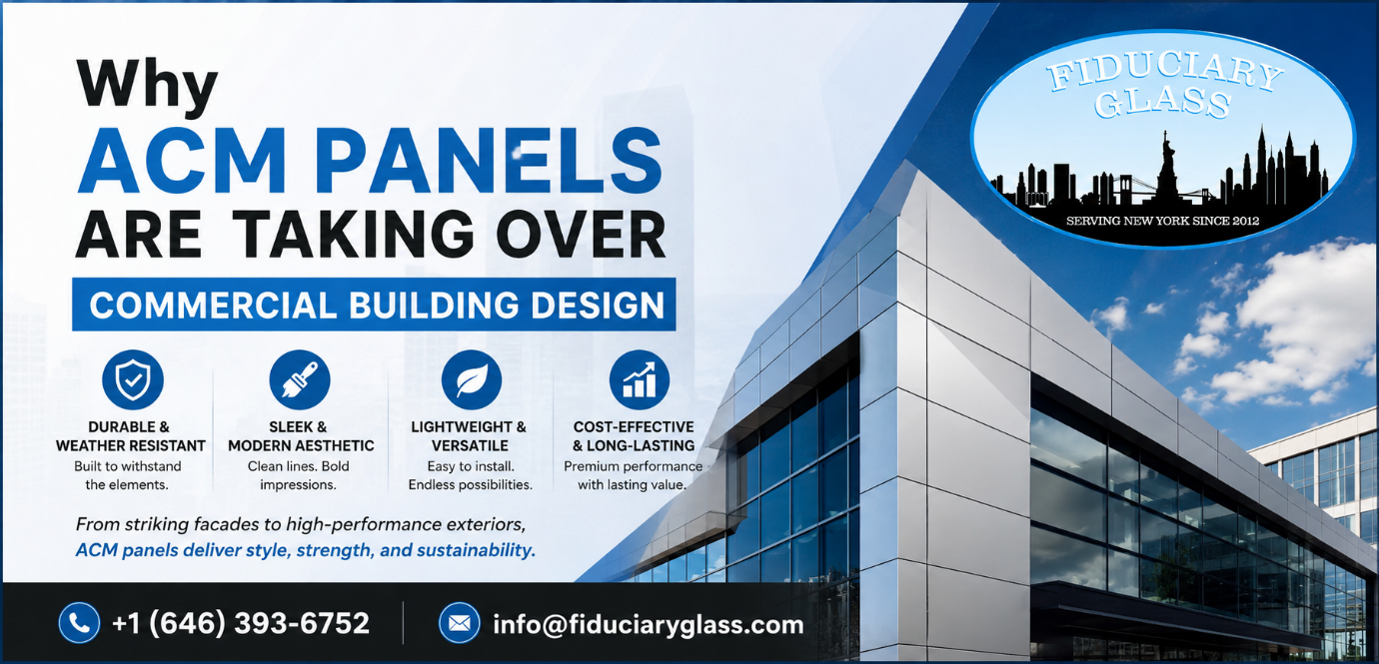
Quick Overview: Modern commercial buildings need exterior materials that look great and perform well over time. ACM panels have become a popular choice because they offer durability, design flexibility, and low maintenance. This blog explains why developers, architects, and property owners continue to choose ACM panel systems and how they support attractive, functional, and long-lasting commercial facades.
A building’s exterior speaks before anyone steps inside. A modern, well-designed facade can make a property look professional and inviting. In contrast, an outdated exterior may affect how people view the business. That is one reason more property owners are choosing ACM composite panel systems. These panels combine style, durability, and value.
Today, commercial ACM panel installation NYC projects are common across offices, retail centers, hotels, and healthcare facilities. So, what makes ACM panels such a popular choice? Let’s take a closer look.
What Are ACM Panels?
ACM stands for Aluminum Composite Material. These panels are made from two aluminum sheets bonded to a solid core. The result is a material that is lightweight but durable.
Unlike some traditional facade materials, ACM panels are easy to fabricate and install. They are also available in many colors, finishes, and textures. As a result, architects have more freedom when designing commercial buildings.
Create a Modern and Professional Look
First impressions matter. When people see a building, they often form an opinion within seconds. Therefore, appearance plays a big role in commercial construction. ACM panels create clean lines and smooth surfaces. They help buildings look fresh, modern, and polished.
In addition, they can be customized to match different architectural styles. Some finishes even resemble natural materials like wood or stone. That flexibility is one reason architectural composite panels are widely used in modern commercial projects.
Lightweight but Strong
Here’s where ACM panels really stand out. Many exterior materials are heavy. As a result, they can place extra stress on a building’s structure. ACM panels are much lighter. However, they still offer excellent strength and durability.
Because of their lighter weight, transportation and installation are often easier. This can help reduce project timelines and improve construction efficiency. Simply put, they provide strength without the bulk.
Built for Tough Weather Conditions
Commercial buildings face a lot. Rain. Wind. Heat. Snow. Constant temperature changes. Over time, these conditions can damage some facade materials. However, ACM panels are designed to handle harsh environments.
Their protective finishes help resist fading, corrosion, and surface wear. As a result, buildings can maintain their appearance for years. This is especially important in busy cities where building exteriors are constantly exposed to changing weather conditions.
Lower Maintenance Requirements
Nobody wants a facade that constantly needs repairs. Fortunately, ACM panels require relatively little maintenance. Unlike materials that may need frequent painting or restoration, ACM panels are easy to clean and maintain. In most cases, routine washing helps keep them looking sharp.
As a result, property owners often spend less time and money on exterior upkeep. That is a big win for commercial buildings.
Supports Energy-Efficient Design
Energy efficiency has become a major focus in construction. Because of this, many developers look for materials that support better building performance. ACM panels are often used in rainscreen systems. These systems help manage moisture while protecting the building envelope.
In addition, they can work alongside insulation systems to improve thermal performance. While results vary from project to project, ACM panels can contribute to a more efficient building design.
Design Flexibility Matters
No two commercial buildings have the same design goals. That is why ACM panels are valued for their flexibility. They can be fabricated into different shapes, sizes, and layouts to match a wide range of architectural styles.
As a result, ACM panel applications include office buildings, retail centers, hotels, healthcare facilities, schools, and mixed-use developments. Simply put, ACM panels adapt to almost any commercial project.
How Do ACM Panels Compare?
When discussing ACM vs metal cladding, ACM panels often stand out for their lightweight design, smooth finish, and wider range of design options. Another common comparison is ACM vs curtain wall systems. Curtain walls use large glass sections to bring in natural light, while ACM panels cover solid exterior areas.
In many commercial projects, both systems are used together to create attractive, durable, and well-balanced building facades.
More Than Just an Exterior
A commercial facade should do more than cover a building. It should strengthen its appearance, support performance, and reflect the quality of the business inside. That is why ACM composite panels remain a smart choice for modern commercial properties.
Fiduciary Glass helps bring these projects together with ACM panel systems, storefronts, curtain walls, and custom glass solutions tailored to commercial spaces. Every project is approached with a focus on durability, functionality, and visual appeal.
Planning a new build or exterior upgrade? Connect with Fiduciary Glass and turn your vision into a facade that leaves a lasting impression.
FAQs
1. Why are ACM panels popular in commercial construction?
They provide a sleek look, require minimal maintenance, resist weather exposure, and offer flexibility for various architectural designs and building types.
2. Are ACM panels durable in harsh weather conditions?
Yes. ACM panels are designed to withstand rain, wind, temperature changes, and UV exposure while maintaining their appearance over time.
3. What types of buildings use ACM panel systems?
Office buildings, retail centers, hotels, healthcare facilities, schools, and mixed-use developments frequently use ACM panels for exterior facade applications.
4. Can ACM panels be customized for different designs?
Yes. ACM panels come in various colors, finishes, sizes, and shapes, allowing architects to create unique and visually appealing commercial facades.
5. Do ACM panels require a lot of maintenance?
No. ACM panels typically require routine cleaning and basic inspections, making them a low-maintenance solution for commercial building exteriors.








Leave a Reply