
A building entrance creates a first impression before anyone walks through the door. The right covering can improve comfort, protect visitors from weather, and add to the building’s overall look. But choosing between a glass canopy vs metal awning can feel confusing because both options serve different needs. The better choice depends on your property design, purpose, budget, and the experience you want to create for visitors.
Difference Between a Glass Canopy and a Metal Awning
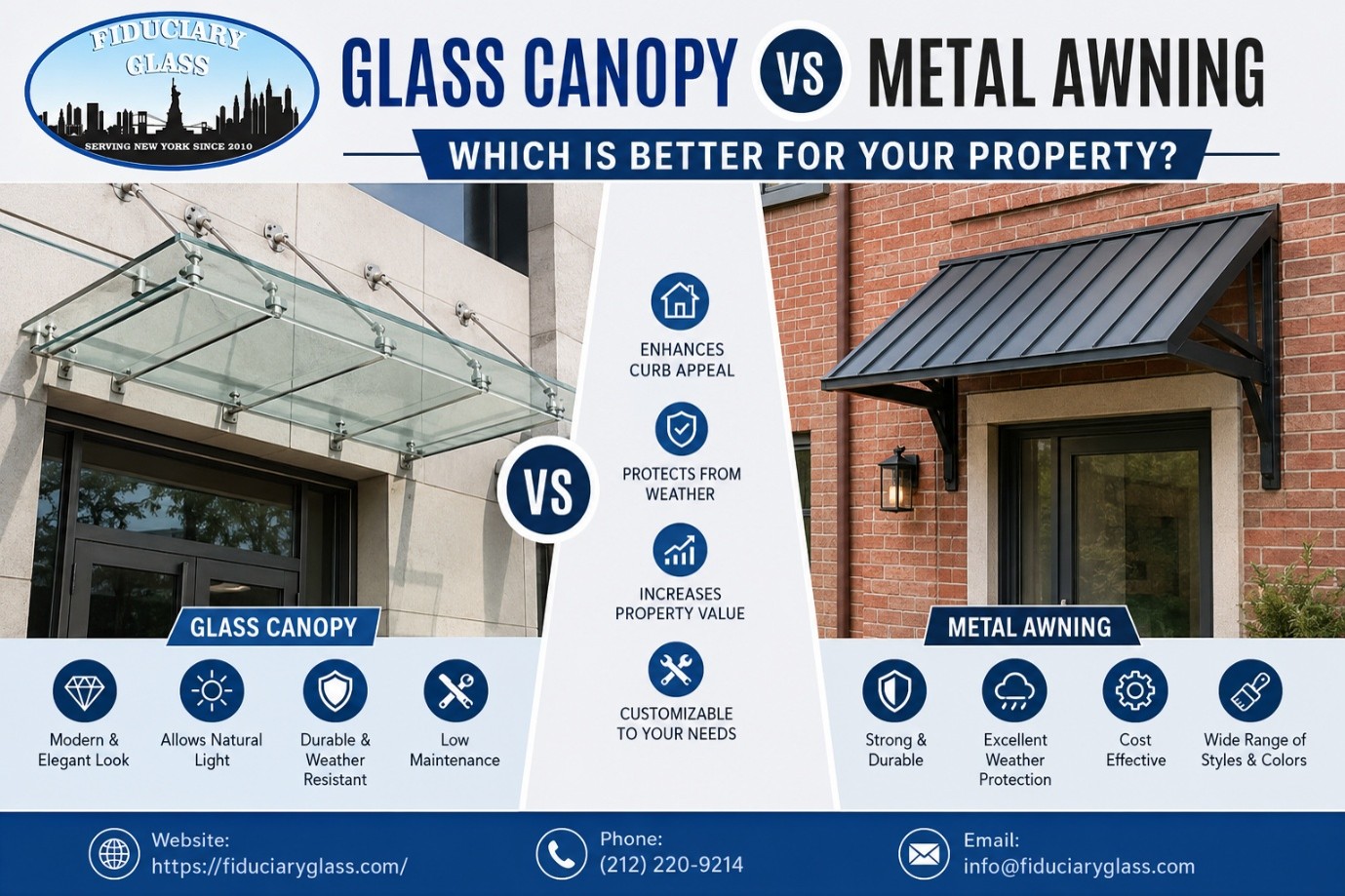
A glass canopy and a metal awning both provide protection from rain, sunlight, and changing weather conditions. However, they create a very different appearance and feel.
A metal awning usually uses materials like aluminum or steel. It focuses on practical coverage and strong protection. Many commercial properties choose metal awnings because they offer a simple and reliable solution without adding a major design feature.
A glass canopy uses architectural glass combined with a carefully designed support structure. It provides shelter while allowing light to pass through. This creates a cleaner and more open appearance around entrances.
The main difference in the canopy vs awning comparison comes down to design, function, and how each option fits the building.
A glass canopy can make a property feel:
- More open and welcoming
- Brighter during the day
- More modern and stylish
- Better connected with surrounding architecture
A metal awning can work well when the main goal is basic weather protection. However, a glass solution often becomes part of the building’s visual identity.
For example, a luxury apartment building in New York City may choose a glass canopy to create a premium entrance experience. A service area or warehouse entrance may only need a simple metal cover.
Why Do Modern Buildings Often Choose Glass Canopies?
Modern architecture often uses glass because it creates a sense of openness. Unlike solid materials that block views and light, glass keeps spaces feeling bright and connected. A glass canopy can improve the appearance of office buildings, hotels, retail spaces, apartment entrances, and luxury residential properties.
Architects and designers often select glass because it works well with materials like steel, concrete, stone, and aluminum. It can complement existing design elements instead of competing with them.
The glass awning vs canopy decision often depends on the purpose of the project. If a property owner only needs a simple cover, a metal option may be enough. But if the goal is to create a strong architectural statement, glass can offer a more refined look.
Glass Canopy Designs Offer Different Options for Modern Projects
Not every property needs the same type of glass structure. The design choice depends on the building style, entrance size, and the look the owner wants to achieve.
Understanding the types of glass canopy systems available helps property owners make better decisions. Some common options include:
- Point-supported glass canopies that create a clean and minimal appearance
- Suspended glass canopies that provide a floating visual effect
- Framed glass canopy systems that offer additional support and structure
- Custom architectural designs created for unique buildings
How Do Glass Canopies and Metal Awnings Compare in Durability and Maintenance?
Durability plays a major role when choosing an entrance covering. A canopy or awning needs to handle daily exposure to rain, wind, sunlight, and temperature changes while maintaining its appearance.
A professionally installed glass canopy system can provide long-term performance when the design, materials, and support structure match the building’s needs. Modern architectural glass uses strong safety materials designed for construction applications.
Glass canopies offer benefits such as:
- A clean and modern appearance
- Strong performance with proper installation
- Resistance to regular outdoor exposure
- Better integration with contemporary building designs
However, glass still needs regular care. Dust, water marks, and outdoor debris can affect its appearance over time. Routine cleaning helps maintain the clear and polished look that makes glass attractive.
Metal awnings also provide reliable protection. High-quality aluminum and coated metals can handle different weather conditions. However, metal surfaces may show signs of aging depending on the material quality and environment.
Common concerns with metal awnings include:
- Faded finishes
- Scratches or surface damage
- Possible corrosion
- The need for repainting or refinishing
The right option depends on the property’s goals. A commercial building owner who wants a modern entrance that matches a high-end design may prefer glass. Someone who needs simple coverage for a service area may find metal more practical.
Installation quality also matters. Even the best material can create problems if the design or installation process does not follow proper standards.
This is where glass canopy engineering basics matter. Professionals check the glass strength, support design, building structure, and local weather conditions before installation. These steps help create a safe and reliable canopy that fits the property’s needs.
Which Option Works Better for Commercial and Residential Properties?
The best choice between glass and metal depends heavily on the type of property. A solution that works for a small entrance may not meet the needs of a large commercial building. Commercial properties often focus on creating a strong first impression. Entrances are one of the first areas customers, employees, and visitors notice. Glass canopies work well for corporate facilities and apartment complexes.
A glass entrance system can create a more premium appearance while connecting with other architectural features, such as glass walls, storefront systems, and modern doors.
For example, a New York City office building may use a custom glass canopy above the entrance to create a professional and welcoming appearance. The canopy becomes more than weather protection. It becomes part of the building’s design.
Metal awnings can still be a good choice for certain commercial properties. Warehouses, service entrances, and buildings with simpler designs may benefit from a practical metal solution.
Residential projects require a different approach. Homeowners often want a structure that improves the property without making the entrance feel heavy. A glass canopy can work well for modern homes, luxury entrances, townhouses, apartment buildings, and high-end renovation projects.
It adds style while maintaining an open feel. A metal awning may suit homeowners who want a lower-cost option focused mainly on shade and weather protection.
Factors You Should Consider Before Choosing the Right Entrance Cover
The right choice depends on how your property looks, how you plan to use the entrance, and how much maintenance you want. Consider these factors before deciding:
- Building style: The entrance cover should match the property’s overall architecture.
- Weather conditions: Local climate can affect material and support choices.
- Purpose: Decide if you need simple weather protection or a stronger design feature.
- Budget and maintenance: Consider both upfront costs and long-term care.
A successful installation requires proper measurements, structural planning, and expert guidance. A well-designed glass canopy system can improve the entrance while meeting safety and performance needs.
Final Remarks
Choosing between a glass canopy vs metal awning depends on what you want your property to achieve. A metal awning can provide practical weather protection and a simple design, while a glass canopy can add natural light, modern style, and a stronger architectural presence.
For commercial buildings, luxury residences, and properties where appearance matters, a custom glass solution can create a more welcoming entrance experience. The best choice depends on your building type, design goals, budget, and long-term expectations.
Fiduciary Glass helps New York City property owners, architects, designers, and contractors bring modern architectural visions to life through custom glass solutions. From elegant glass canopies and commercial entrances to specialty glass systems, our team combines thoughtful design, precise installation, and industry expertise to create structures that perform beautifully for years. Whether you are upgrading a commercial property or designing a luxury residential space, we deliver glass installations that improve appearance, functionality, and the overall experience of your building.
Frequently Asked Questions
1. Is a glass canopy more expensive than a metal awning?
A glass canopy usually costs more due to custom design, engineering, materials, and professional installation requirements.
2. Which lasts longer, a glass canopy or a metal awning?
Both can last for years, but lifespan depends on material quality, installation, weather exposure, and maintenance.
3. Are glass canopies safe for commercial buildings?
Yes, professionally designed glass canopies use safety glass and engineered support systems for commercial applications.
4. Can a glass canopy handle harsh weather conditions?
Yes, properly engineered glass canopy systems can withstand weather conditions when designed for the specific location.
5. What factors affect the cost of a glass canopy installation?
Size, glass type, support structure, design complexity, installation requirements, and project location affect overall costs.

Leave a Reply