

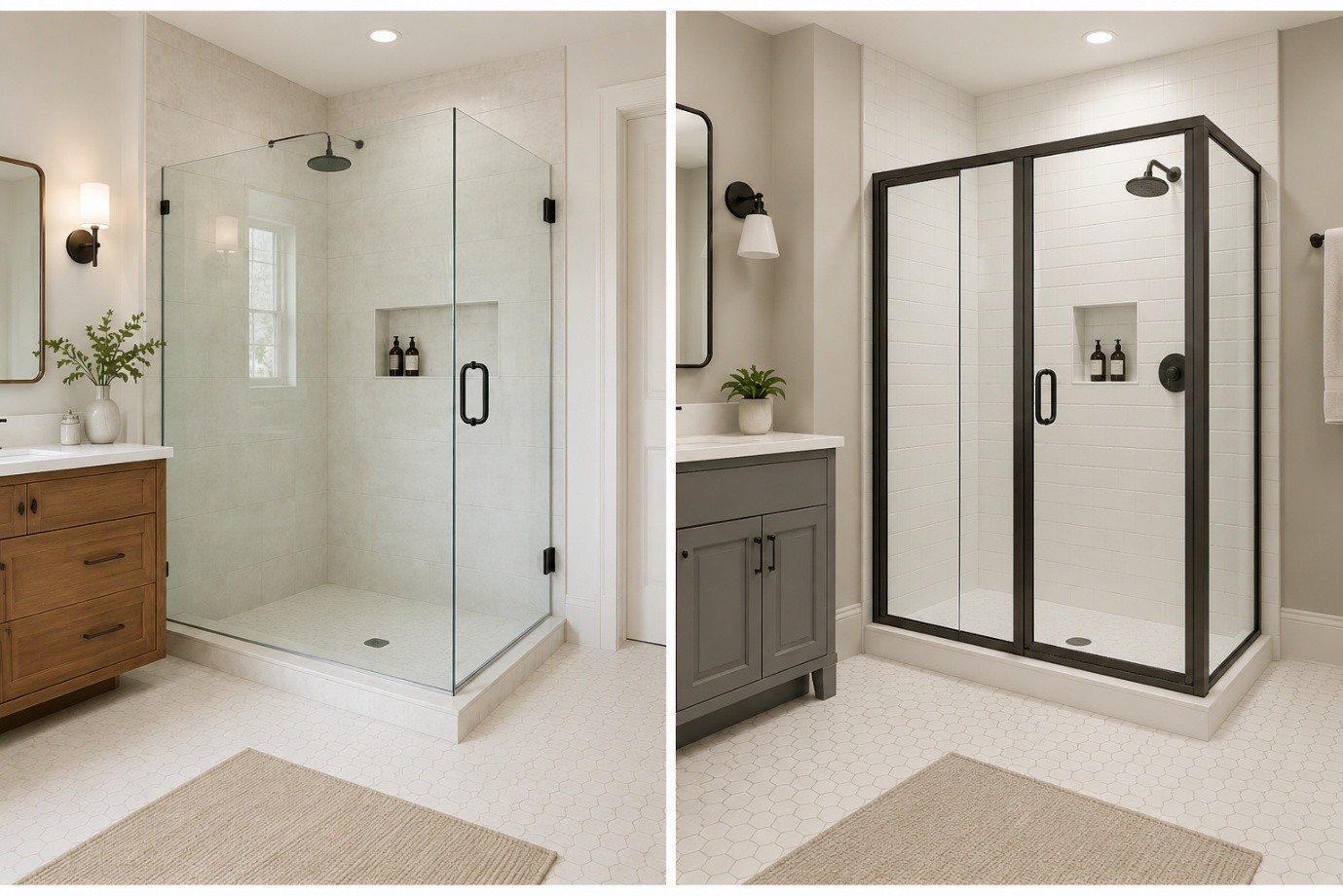
Overview: This blog explains how shower door style impacts bathroom space. You will compare frameless and framed options through swing, sliding, and pivot designs. It helps you decide what fits small or large bathrooms better. You also learn installation insights from custom glass experts, focusing on design, function, and long-term space efficiency for modern homes and commercial projects.
When you compare frameless vs framed shower doors, you are really choosing between openness and structure. One feels light and seamless, the other feels framed and firm. The big question is simple: which one gives you more usable bathroom space without making things feel tight or blocked in daily movement?
Frameless designs usually remove bulky metal borders, giving a cleaner visual flow. Framed options bring support and stability but may visually shrink small rooms. The choice is not just style, it is about how your bathroom breathes every single day.
Small vs Large Bathrooms: Who Wins the Space Game?
In small bathrooms, every inch counts. Frameless designs often win here because they reduce visual clutter and make the room feel wider. Glass reflects light better, and suddenly the walls feel like they moved a little farther away, even if they didn’t.
In larger bathrooms, framed systems can still work well. They offer durability and cost control while maintaining structure. Space is not a problem here, so you can focus more on design preference than strict space optimization.
Swing, Sliding, or Pivot: Which One Eats Less Space?
Door movement changes everything. Swing doors need clearance, which can be tricky in tight layouts. Sliding doors stay within their track, saving floor space. Pivot doors rotate on a fixed point, offering balance between elegance and movement control depending on bathroom layout and fixture placement.
Sliding systems often lead in compact bathrooms. They behave like a smooth window rather than a door. Swing doors feel traditional but demand open space. Pivot systems feel modern, but need smart planning to avoid collisions with vanities or toilets.
Framed vs Frameless: The Difference Between Design and Function
The difference between frameless and framed shower doors is not just about looks. Framed doors use metal edges to hold glass firmly in place, which increases stability. Frameless doors rely on thicker glass and precise fittings, creating a clean, open visual flow with fewer barriers.
From a design standpoint, frameless feels like luxury minimalism. Framed feels like structured reliability. In terms of space perception, frameless almost always wins because it removes visual weight from the room.
Installation Reality Check: Frameless Systems Need Precision
The frameless shower installation is not just fitting glass. It is about exact measurement, perfect leveling, and wall strength checks. Even a small error changes door alignment. This is why expert installation matters more than the glass itself in long-term performance and safety.
A frameless system depends on alignment. If the wall is not straight, adjustments must be made before glass placement. That is where experience matters. Good installation turns a heavy glass panel into a smooth, effortless movement experience.
How Frameless Glass Changes Bathroom Flow Completely
The frameless glass installation creates a visual trick. The bathroom feels larger because your eye travels without interruption. No metal breaks. No heavy borders. Just continuous space that feels clean and modern even in compact layouts.
This type of installation works best when paired with light tiles and proper lighting. Reflection becomes your friend. The space feels like it expanded without actual construction changes. That is the real power of glass done right.
What Happens During Installing Frameless Shower Door Projects?
During installing frameless shower door, precision becomes everything. The hinges, seals, and support brackets must align perfectly. Even a few millimeters can affect water sealing and door movement. This is where professional handling protects both design and function.
You also get flexibility in layout planning. Doors can open outward or be designed as sliding panels depending on space constraints. This makes frameless systems adaptable for both small and large bathrooms when designed correctly from the start.
Frameless Glass Door Installation: Where Design Meets Engineering
The frameless glass door installation blends engineering with aesthetics. The glass thickness, hardware strength, and wall anchoring all work together like a silent system. When done properly, the door feels weightless but remains extremely strong in daily use.
This installation style is often chosen in modern homes, hotels, and premium commercial spaces. It delivers clean sightlines and reduces visual noise. That is why architects often prefer it when space perception matters more than physical size.
Final Take: Which One Truly Maximizes Bathroom Space?
Frameless wins in visual space. Framed wins in structural simplicity. But the real decision depends on layout, usage, and design expectations. Sliding frameless systems often give the best balance for small bathrooms, while large bathrooms can explore both freely without restriction.
We design and install custom glass systems that fit real spaces, not just drawings. At Fiduciary Glass Inc., we ensure precision-driven installations that elevate both function and design while keeping your bathroom space efficient and future-ready.
FAQs
1. Which shower door saves more space in small bathrooms?
Sliding frameless doors save more space because they remove swing clearance and reduce visual clutter, making compact bathrooms feel more open and breathable.
2. Are frameless shower doors harder to install?
Yes, they require precise measurements, strong wall anchoring, and expert handling to ensure perfect alignment and water sealing without structural issues.
3. Do framed shower doors last longer?
Framed doors offer strong structural support and can be more forgiving in installation, making them durable in high-use environments with lower maintenance needs.
4. Which design looks more modern?
Frameless designs feel more modern due to clean lines, minimal hardware, and uninterrupted glass surfaces that enhance open-space perception.
5. Can sliding doors be frameless?
Yes, sliding systems can be frameless when designed with precision hardware, offering space-saving function with a clean, premium visual finish.








Leave a Reply