
Overview: This blog explains how mirror design choices change safety, style, and interior flow. You will explore framed, beveled, tinted, and decorative mirror options built with strong backing systems. It helps you understand how custom glass fabrication improves durability, aesthetics, and seamless integration in homes and commercial spaces.
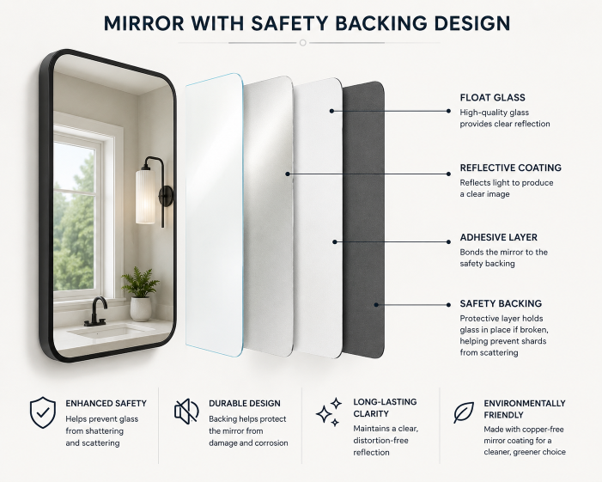
A mirror is not just a reflection. It is architecture on your wall. With a mirror with safety backing, you get strength hidden behind beauty. The glass stays secure even if it breaks, while the design stays clean and modern. This is where a mirror with safety backing changes from simple utility to interior design value. Let’s explore how design options shape both safety and style in real spaces.
Framed Safety Mirrors: Classic Structure with Modern Strength
Framed safety mirrors bring structure and definition to interiors. The frame locks the edges and supports the glass, making it ideal for high-use areas like gyms, hotels, and bathrooms. You can choose metal, wood, or powder-coated finishes. Frames also help hide mounting systems, giving a polished and secure appearance without losing design flexibility or safety performance.
Beveled Mirrors: Soft Edges with Depth and Character
Beveled mirrors cut the edges at an angle, creating a soft glow effect when light hits them. This design adds depth without heavy framing. Even with elegant edges, the mirror still uses reinforced backing for safety. It works beautifully in entryways and living rooms where you want subtle luxury without overpowering the wall space or surrounding décor.
Tinted Mirrors: Mood Control with Built-In Protection
Tinted mirrors are gaining attention in modern interiors. Grey, bronze, and smoke tones reduce glare and add mood control. These often use safety backing for mirrors to ensure that even large panels remain stable in commercial or residential setups. Tinted surfaces also blend well with metal, stone, and minimalist interiors, making spaces feel calm and controlled.
Decorative Mirrors: Custom Art with Structural Support
Decorative mirrors bring patterns, etching, and geometric cuts into play. They act like functional art pieces. Behind the design, strong safety layers ensure durability in busy environments. Whether used in retail spaces or luxury homes, decorative mirrors allow full customization while maintaining strength. This is where design creativity meets engineering precision without compromise.
Frameless Mirrors: Clean Look with Hidden Strength
Frameless mirrors give a floating effect, making spaces feel larger and brighter. Even without visible borders, they rely on strong backing systems for safety and long-term use. This style is popular in modern bathrooms and offices. It removes visual weight while keeping structural integrity intact through advanced mounting and adhesive technologies.
Integrated Mirror Walls: Seamless Architecture Design
When mirrors become part of walls, they change how space feels. Integrated mirror panels are used in gyms, showrooms, and luxury homes. These installations depend heavily on mirror safety backing to ensure stability across large surfaces. The result is a seamless reflection wall that expands space visually while staying secure under daily use.
Customization Options That Change Everything
Customization is where mirror design becomes personal. You can adjust thickness, edge polish, tint level, or engraving patterns. Every option still relies on safety layers behind the glass. The goal is simple: make it beautiful, but make it strong first. This balance ensures long-term performance in both residential and commercial environments.
How Safety and Design Work Together in Real Spaces
Modern interiors demand more than beauty. They need reliability. A mirror with safety backing ensures that even if glass breaks, fragments stay bonded. This reduces risk in homes, schools, and retail spaces. Designers now treat safety as part of aesthetics, not an afterthought. That shift is shaping how interiors are built today.
Choosing the Right Mirror Style for Your Space
Start with purpose. Bathrooms need moisture resistance. Retail spaces need impact safety. Living rooms need visual depth. Once the purpose is clear, design follows naturally. Framed, beveled, tinted, or decorative styles all work differently, but each can be engineered with strong safety backing. The right choice always balances design flow and structural reliability.
Conclusion: Where Design Confidence Begins
Every mirror tells a story of space, light, and structure. With strong engineering behind it, design becomes worry-free. A well-built mirror with safety backing ensures beauty without risk and style without compromise. For custom fabrication and precise installation, we at Fiduciary Glass Inc deliver solutions that shape safer, smarter interiors.
FAQs
1. What is safety backing in mirrors?
Safety backing is a protective layer applied behind mirrors. It holds glass fragments together if breakage happens, reducing injury risk and improving installation safety in all environments.
2. Are framed mirrors safer than frameless ones?
Both can be safe when properly installed. Framed mirrors add edge protection, while frameless mirrors rely on strong backing and secure mounting systems for safety.
3. Can tinted mirrors be used in bathrooms?
Yes, tinted mirrors work well in bathrooms. They reduce glare and add style, but must include proper moisture resistance and safety backing for long-term durability.
4. Do decorative mirrors compromise strength?
No. Decorative mirrors are designed with engineered backing systems. They maintain strength while offering patterns, etching, and artistic finishes for interiors.
5. Where are safety-backed mirrors most useful?
They are ideal for homes, gyms, hotels, retail stores, and commercial buildings where safety, durability, and high visual impact are equally important.






Leave a Reply