

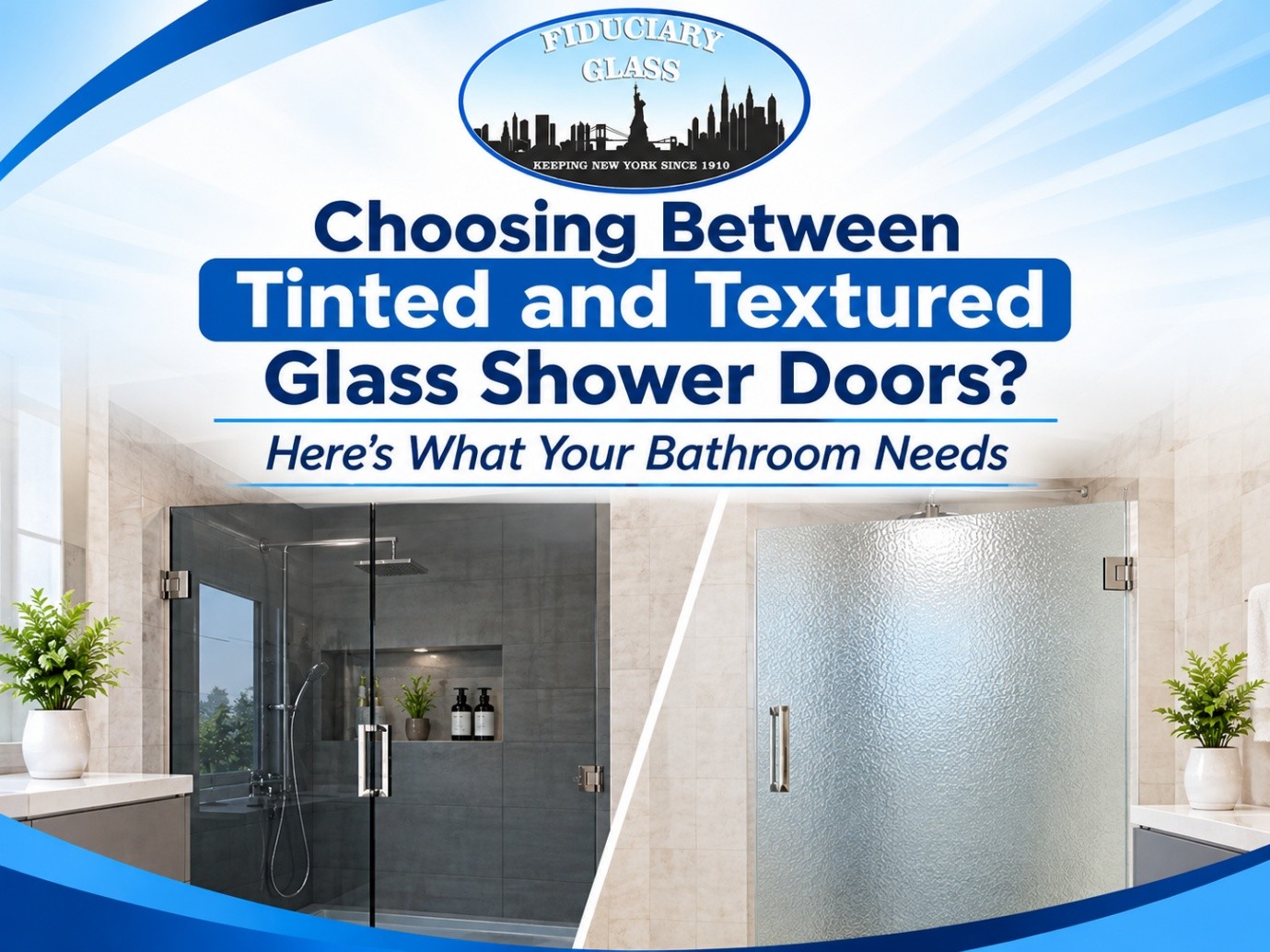
Summary: Choosing the right shower glass involves more than selecting an attractive finish. This blog compares tinted and textured options, exploring their differences in privacy, light transmission, appearance, maintenance, and installation. It also explains what homeowners should consider when selecting an enclosure that complements their bathroom.
A shower enclosure can influence how spacious, private, and visually balanced a bathroom feels. While clear glass remains a familiar choice, tinted glass shower doors and textured glass shower doors offer alternatives for homeowners looking to introduce more character or adjust visibility. Although both create a distinctive appearance, they achieve different effects. Understanding these differences can help you choose a finish that suits your space and everyday needs.
Tinted Glass: A Distinctive Look With Controlled Light
Tinted glass introduces a consistent color tone into the shower enclosure. Depending on the shade, it can create subtle contrast or complement materials such as natural stone, dark fixtures, wood finishes, and minimalist cabinetry.
For homeowners who want an alternative to conventional clear glazing, tinted shower glass offers a refined appearance without relying on decorative patterns.
The shade deserves careful consideration, however. Darker glass generally allows less visible light to pass through, which can make a compact bathroom feel more enclosed. Lighter tints provide a softer effect while maintaining a greater sense of openness.
Tint can reduce visibility, but it does not guarantee complete privacy. The result depends on the shade, lighting conditions on both sides of the enclosure, and viewing angle.
Textured Glass: Privacy Through Surface Design
Textured glass uses patterns or surface treatments to distort the view through the panel. Depending on the design, it can obscure details while allowing light to enter the shower area.
This makes textured shower glass worth considering when homeowners want more visual separation without completely closing off the shower.
Options range from subtle linear patterns to more pronounced decorative finishes. A fine texture can create an understated appearance, while a stronger pattern can become a focal point in the bathroom.
Privacy varies between finishes. Some patterns obscure outlines more effectively than others, so reviewing physical samples is important before making a decision.
Tinted or Textured: Which Finish Suits Your Bathroom?
Both finishes offer alternatives to standard clear glazing, but their visual effects and practical considerations differ.
|
Design consideration |
Tinted glass |
Textured glass |
|
Visual effect |
Adds a consistent color tone | Introduces patterns or surface detail |
|
Light transmission |
Depends on tint shade and glass specification |
Depends on the texture and glass construction |
|
Privacy |
Softens visibility but does not guarantee concealment |
Distorts visibility according to the pattern |
|
Design compatibility |
Complements coordinated color palettes and contemporary finishes |
Suits decorative, modern, and transitional interiors |
| Cleaning | Generally has a smooth surface |
Some patterns require more detailed cleaning |
If you prefer a consistent color effect, tint offers greater control over the enclosure’s appearance. If visual separation and decorative detail are priorities, textured finishes deserve closer consideration.
Five Details to Check Before Choosing Your Glass
The finish is only one part of a successful shower enclosure. Glass specifications, hardware, dimensions, and maintenance requirements also influence the final result.
Before selecting tinted shower glass doors, consider these details:
- Safety specification: Confirm that the glass is suitable for shower enclosure use and meets applicable safety requirements.
- Thickness and weight: The glass must be compatible with the enclosure design, hinges, brackets, and support points.
- Hardware coordination: Handles, hinges, and brackets should complement the glass and other bathroom fixtures.
- Door clearance: Account for nearby vanities, toilets, walls, and other fixtures before deciding on the opening direction.
- Cleaning requirements: Check which products are suitable for the selected finish. Abrasive materials and unsuitable chemicals can damage certain treatments or hardware.
These details are especially important for custom enclosures, where measurements and hardware placement must suit the actual bathroom conditions.
Consider Bathroom Size and Lighting
A finish that looks impressive in a showroom can create a different effect once installed. Darker tint can introduce contrast but might make a small shower feel more enclosed. Lighter shades can provide visual distinction without creating as much contrast.
Textured finishes introduce privacy and character, but pronounced patterns can compete with decorative tiles, bold stone veining, or other strong design elements. Subtle textures can be a better fit when the bathroom already has several visual features.
If you are considering a tinted glass shower door, compare samples against your actual tile, lighting, and hardware finishes. For textured options, examine visibility from different angles and under natural and artificial lighting.
Installation Quality Matters as Much as Glass Selection
Even a carefully selected finish requires accurate measurement and proper installation. Wall alignment, opening dimensions, glass weight, mounting conditions, and hardware compatibility all affect the finished enclosure.
Custom panels should be measured against the actual opening rather than approximate dimensions. Installers also need to account for door swing, panel clearances, suitable support, and the manufacturer’s hardware requirements.
Glass edges and corners require careful handling to prevent damage. Mounting points must be appropriate for the underlying wall construction, while sealing details should follow the enclosure manufacturer’s instructions.
These considerations apply to both replacement projects and custom shower enclosures. The selected finish must also be compatible with the available glass specifications and intended installation method.
Find the Right Glass for Your Bathroom
The best shower enclosure brings together appearance, privacy, practical maintenance, and reliable performance. Tinted glass offers a distinctive color finish, while textured glass introduces surface detail and can diffuse visibility. The right choice depends on your bathroom’s layout, lighting, and priorities.
Fiduciary Glass helps homeowners explore shower door options and find solutions suited to their bathroom layouts and design preferences. Contact Fiduciary Glass to discuss your project and determine which glass finish and enclosure configuration will work best for your space.
Frequently Asked Questions
-
Do tinted shower doors provide complete privacy?
No. Tint can reduce visibility, but privacy depends on the shade, lighting conditions, and viewing angle. A darker finish should not automatically be considered fully private.
-
Are textured glass shower doors difficult to clean?
Cleaning requirements depend on the pattern and surface finish. Some textures collect soap residue and mineral deposits more easily, so regular cleaning with suitable products is important.
-
Can tinted and textured finishes be used in custom shower enclosures?
Yes. Suitable glass options can be incorporated into custom enclosures, depending on available specifications, dimensions, hardware compatibility, and installation requirements.
-
Does textured glass make a bathroom look smaller?
Not necessarily. Its visual effect depends on the pattern, transparency, lighting, and surrounding finishes. Subtle textures can maintain openness, while heavier patterns create a stronger visual presence.
-
Which shower glass option is better for a small bathroom?
Neither is automatically better. Lighter tints and subtle textures can help maintain an open appearance. Comparing samples in the bathroom’s actual lighting can help determine which finish works best.







Leave a Reply