


Summary: This blog explains why shower doors that look identical on installation day can perform differently over time. It explores preparation, hardware alignment, structural support, sealing, and curing, along with signs of poor workmanship. It also covers NYC bathroom challenges and when professional installation makes more sense.
Two shower doors can look identical when installed. A few weeks later, one still seals properly while the other leaves a puddle on the floor. The difference is rarely the glass itself. It often comes down to the care taken when installing shower door systems, from preparing the opening to securing hardware and allowing sealants to cure.
Proper Preparation Comes Before the Glass
Good results start before anyone lifts a panel. Installing glass over unfinished or damp surfaces can affect alignment and sealing, so the bathroom must be ready.
Tile, grout, and waterproofing work should be complete, with surfaces allowed to dry according to the materials used. The installer should also confirm that the opening has not changed since measurement. Any alterations to the walls, curb, or finished surfaces must be considered before installation.
Access matters, too. Glass panels are heavy and awkward to carry through narrow hallways, stairwells, and elevators. Clearing the route and protecting floors, vanities, and tub edges helps prevent damage.
Precision Matters More Than Appearance
The installation of shower door hardware must account for leaning walls, uneven floors, and openings that are not perfectly square. These conditions are particularly common in older buildings.
A careful installer checks the opening, marks mounting positions with a level, and confirms that the selected hardware suits the actual conditions. Hinges, tracks, and brackets need suitable structural backing or approved anchors for the specific substrate. Tile alone should not be treated as structural support.
The process generally involves inspecting the opening against the ordered glass, marking mounting points, positioning the panels, and adjusting the hardware. Glass must remain properly supported during handling because impact to an exposed tempered-glass edge can cause damage. Once positioned, the door should move smoothly with consistent clearances.
Frameless systems require especially precise adjustment. Hinge placement, glass thickness, panel clearances, and mounting conditions all affect operation. Even a small alignment error can cause a door to drift open, rub against an adjacent panel, or leave an uneven gap.
Sealing and Curing Protect the Finished Installation
The work is not complete when the glass is in place. Seals, sweeps, and sealant help manage water, but their placement depends on the enclosure design and manufacturer’s instructions.
Incorrect sealant placement can interfere with drainage or leave gaps where water escapes. The installer should follow the specified application method and curing period. Using the shower too soon can disturb the seal before it has properly set.
Warning Signs of Poor Installation
Some problems appear immediately, while others develop after repeated use. Watch for these signs:
- Doors that swing open or shut on their own: This can indicate hinge misalignment or an out-of-plumb wall.
- Uneven gaps: Inconsistent clearances can suggest incorrect glass positioning.
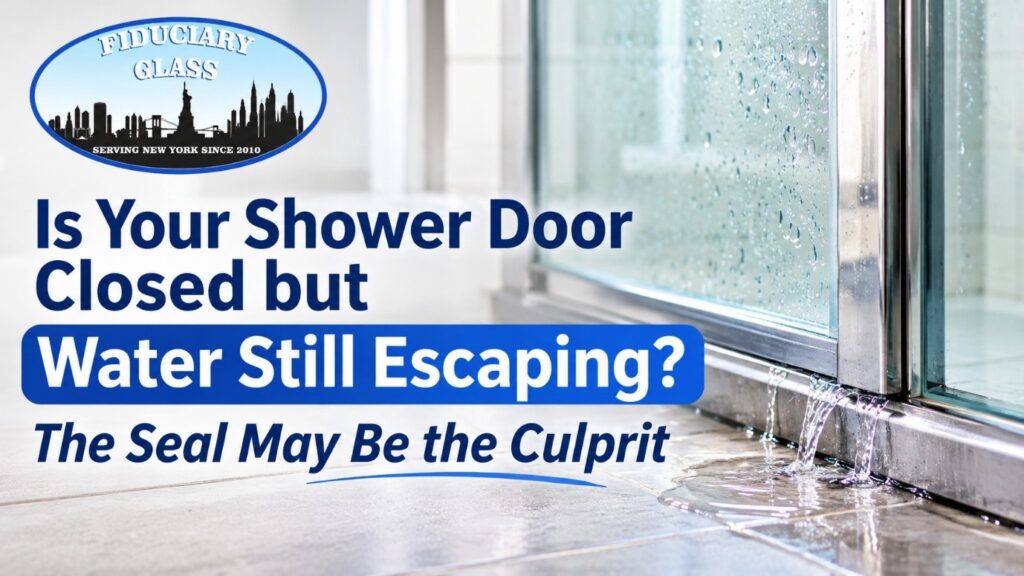
- Water escaping: Leaks near the bottom or sides can point to unsuitable seals, incorrect sealant placement, or alignment problems.
- Chipped glass edges: Impact during handling can damage the panel.
- Cracked tile: Damage around mounting points can indicate improper drilling.
- Rattling or movement: Loose hardware, inadequate anchoring, or an unsuitable mounting surface should be inspected.
Addressing these issues early can prevent continued movement and water exposure from damaging surrounding finishes or allowing moisture beyond the shower enclosure.
Working Within New York City Bathrooms
Bathrooms in NYC often present additional installation challenges. Older buildings can have uneven walls and floors, while co-ops and condos sometimes require advance approvals, scheduling arrangements, or insurance documentation before contractors can begin.
Narrow corridors and small elevators also make transporting large glass panels difficult, requiring careful planning. In multi-unit buildings, water management is particularly important because leaks can affect neighboring spaces. A properly planned enclosure must account for finished surfaces, drainage, and sealing rather than treating the door as an isolated component.
When Professional Installation Makes More Sense
Some framed or sliding kits are designed for experienced DIY users. However, heavy frameless panels, custom dimensions, stone surfaces, and unusual layouts introduce greater handling and installation demands.
For these projects, installing a shower door involves more than following an assembly guide. It requires accurate positioning, suitable anchoring, careful glass handling, and knowledge of the selected hardware system. Professional installation can help reduce the risk of damaged panels, compromised waterproofing, and alignment problems.
When evaluating the installation of glass shower doors, consider the glass weight, mounting conditions, enclosure complexity, and consequences of a fitting error. These factors help determine whether professional support is the more practical choice.
Give Your Shower Door a Better Start
A well-installed shower door should feel secure, move smoothly, and manage water as intended. Long-term performance depends on preparation, accurate alignment, appropriate mounting, and careful sealing.
Fiduciary Glass provides shower door installation for residential projects across New York City. Contact Fiduciary Glass to discuss your bathroom layout, preferred door style, and installation requirements.
Frequently Asked Questions
-
How long does shower door installation usually take?
It depends on the door style, glass specifications, and condition of the opening. Many straightforward installations take one visit, while custom or complex layouts require more preparation.
-
Can I use my shower immediately after installation?
Not necessarily. Sealant needs time to cure. Follow the installer’s or manufacturer’s instructions before exposing the enclosure to water.
-
Should I prepare my bathroom before the installers arrive?
Yes. Complete tile and grout work, clear the installation area, protect nearby surfaces, and confirm that the access route can accommodate the glass panels.
-
Is drilling through bathroom tile difficult?
It requires suitable tools and technique. Improper drilling can crack tile or damage the finished surface. Mounting hardware also needs appropriate structural support.
-
What should I inspect after the door is installed?
Check that the door opens and closes smoothly, gaps appear consistent, and hardware feels secure. Watch for leaks or unusual movement during initial use and report problems promptly.








Leave a Reply