

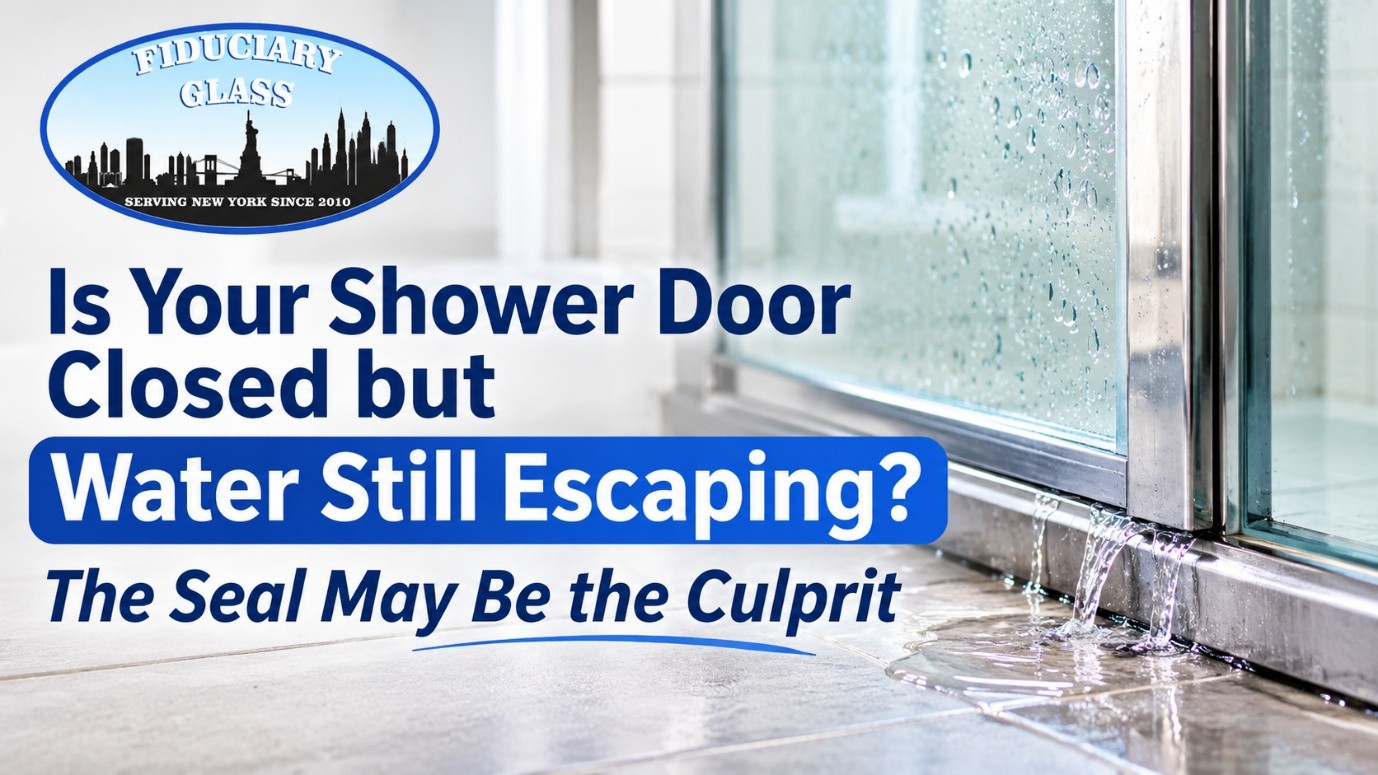
Summary: Worn shower door seals can allow water to escape, leaving damp floors, persistent moisture, and recurring mildew around the bathroom. This blog explains how to identify damaged seals, understand the different types, choose a compatible replacement, and recognize when the underlying problem requires more than a new strip.
You step out of the shower and notice a puddle on the bathroom floor, even though the door was firmly closed. Before assuming the glass or the entire enclosure needs replacing, inspect the flexible strip along its edges. Shower door seal replacement can resolve leaks caused by worn or damaged seals, but choosing the right replacement requires more than matching the appearance of the old strip.
How Does a Shower Door Seal Actually Work?
A shower glass door seal is designed to close the small gaps between the glass and nearby surfaces, such as the shower curb, wall, or adjoining panel. Depending on the enclosure design, it helps contain splashes and direct water back into the shower area.
Most seals are made from flexible vinyl or similar materials that can maintain contact with the glass while allowing the door to open and close. Over time, however, repeated movement, mineral deposits, moisture, and cleaning products can affect their flexibility and fit.
Different enclosure designs use different seal configurations:
- Bottom sweeps: Attach to the lower edge of the door to help direct water toward the shower base.
- Side or vertical seals: Close gaps between the door and a wall or adjoining glass panel.
- Magnetic seals: Use paired magnetic strips to create a closer closure between hinged glass panels.
- Drip rails and sliding-door seals: Help manage water around the lower edge, overlap, or track of sliding enclosures.
Each type serves a particular purpose. Using the wrong profile can leave gaps, interfere with door movement, or prevent the enclosure from closing properly.
Warning Signs Your Shower Door Seal Is Wearing Out
Seal deterioration is often gradual, so homeowners can overlook early warning signs. A small gap or a stiff strip might not seem urgent, but it can allow repeated water escape.
Look for these common indicators:
- Water collecting outside the shower: Puddles near the door after ordinary showers can indicate that the bottom or side seal is no longer containing water.
- Discoloration or yellowing: Changes in appearance can indicate aging, buildup, or material deterioration.
- Cracks and stiffness: A seal that has become brittle or lost its flexibility might no longer sit securely against the glass.
- Visible gaps: If the strip no longer makes consistent contact with the adjoining surface, water can pass through.
- Recurring mildew: Dark spots that return after cleaning can indicate persistent moisture around the seal or nearby joints.
Recognizing these warning signs early can help homeowners determine when shower door seals replacement is necessary. Hard-water deposits and unsuitable cleaning products can accelerate material deterioration, making regular inspection important for preventing leaks and protecting surrounding bathroom finishes.
Choosing the Right Replacement: Five Details to Check
A successful glass shower door seal replacement begins with identifying the correct profile and dimensions. A replacement that looks similar to the original can still be incompatible with the door.
Before ordering, check these details:
- Seal profile: Examine the shape of the existing strip and how it attaches to the glass. Some slide onto the glass edge, while others use a different attachment design.
- Glass thickness: Confirm the actual thickness of the glass. Seals are manufactured to fit specific dimensions, and an incorrect fit can cause slipping or poor contact.
- Length and coverage: Measure the relevant edge carefully. Bottom sweeps and vertical seals often require different lengths and profiles.
- Door configuration: Hinged, pivot, and sliding doors have different movement patterns and sealing requirements.
- Hardware condition: Inspect hinges, rollers, tracks, and adjoining fittings. A worn component can affect the door’s position and prevent a new seal from working properly.
The glass edge should also be clean before fitting a replacement. Mineral deposits and residue can interfere with the seal’s fit and make it harder to achieve consistent contact.
Why Some Shower Leaks Require More Than a New Seal
Not every leak originates from a damaged seal. A replacement can resolve gaps caused by worn material, but it cannot correct problems elsewhere in the enclosure.
A hinged door that has dropped can create uneven gaps, while worn rollers can prevent a sliding door from closing properly. Deteriorated caulking around the walls or shower base can also allow water to escape independently of the door seal.
The location of the leak offers useful clues. Water escaping along the bottom edge can indicate a worn sweep or incorrect door clearance, while moisture near wall joints may point to failing caulking. Drainage issues or an improperly sloped shower base can contribute to water accumulation as well.
Identifying the actual source helps prevent repeated repairs that fail to address the underlying problem.
When Professional Assessment Makes a Difference
Some straightforward seal changes are manageable for homeowners when the door is correctly aligned, and the replacement is compatible. However, problems involving heavy frameless glass, damaged hardware, uneven gaps, or difficult-to-access fittings require greater care.
Frameless shower doors can be heavy, and adjusting their hinges or repositioning a panel without suitable tools and experience can cause glass damage or injury. A professional can inspect the enclosure, identify the source of the leak, and determine whether the issue involves the seal, door alignment, hardware, or surrounding joints.
In New York City, compact bathrooms, older properties, and co-op or condominium requirements can add practical considerations to repair work. Escaping moisture can also affect nearby flooring, cabinetry, and adjoining building materials. Addressing the problem early helps prevent a minor maintenance issue from becoming a more extensive repair.
Stop the Splash Before It Spreads
A shower seal might be a small component, but it plays an important role in keeping water contained and protecting the surrounding bathroom. Choosing a compatible replacement and checking the condition of the entire enclosure can help restore proper function without replacing components that are still in good condition.
Fiduciary Glass works with residential shower door projects across New York City. If your shower door is leaking and you are unsure whether the seal or another component is responsible, contact Fiduciary Glass to discuss your enclosure and explore suitable repair options.
Frequently Asked Questions
-
How often should shower door seals be replaced?
There is no universal replacement schedule. Their lifespan depends on material quality, frequency of use, water conditions, and cleaning practices. Replace a seal when it becomes cracked, brittle, loose, or unable to contain water effectively.
-
Can I replace a shower door seal myself?
A straightforward replacement can often be completed at home if the door is properly aligned and the correct seal is available. However, seek professional assistance if the glass is heavy, the hardware needs adjustment, or the door does not sit correctly.
-
Why does my shower still leak after installing a new seal?
The problem could involve door alignment, worn hinges or rollers, damaged caulking, or the shower base. A new seal cannot correct gaps or water-entry points caused by these underlying issues.
-
Are all shower door seals interchangeable?
No. Seals vary in profile, material, length, attachment method, and compatible glass thickness. The correct option depends on the enclosure’s design and how the door operates.
-
How can I keep shower door seals in good condition?
Clean them regularly using suitable, non-abrasive products and remove mineral deposits before they accumulate. Check for cracks, stiffness, loose sections, and recurring moisture to identify wear early.








Leave a Reply