

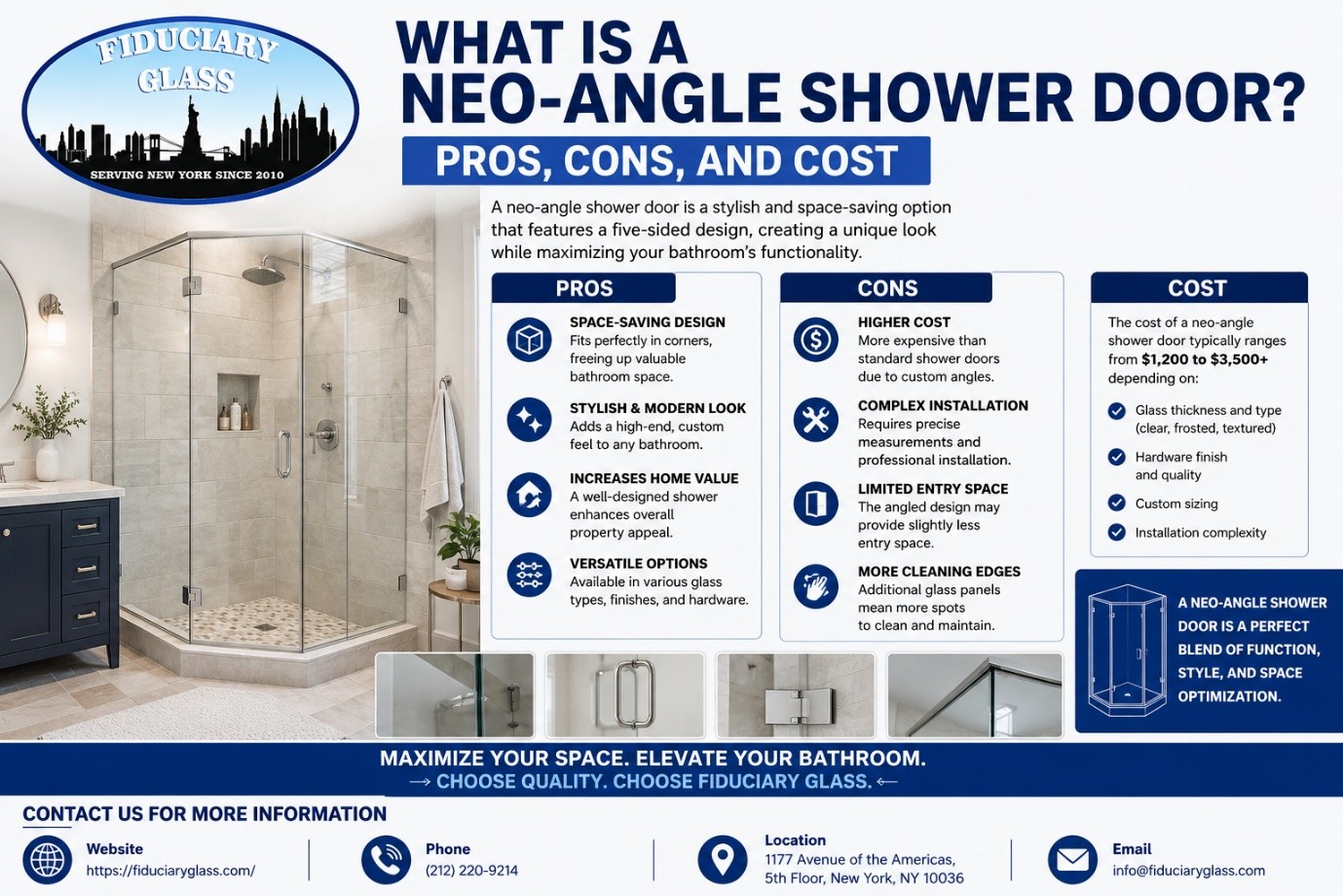
Quick Answer: What Is a Neo-Angle Shower Door?
A neo angle shower door is a corner shower enclosure designed with three glass panels that form a diamond-shaped entry using 135-degree angles instead of a standard 90-degree corner. This design allows the shower to fit neatly into tight or awkward bathroom corners while maximizing usable floor space.
Unlike traditional square or rectangular enclosures, a neo angle shower enclosure typically includes two angled side panels and a front-facing door panel, creating a more open entry without extending too far into the room. This makes it a practical solution for smaller bathrooms or layouts where space is limited.
Because of its unique shape, a neo-angle shower often feels more balanced within the room while still offering a modern, geometric look. It’s especially common in urban apartments and bathrooms where a standard enclosure may not fit efficiently.
Neo-Angle vs. Standard 90° Corner Showers
The key difference between a neo-angle shower and a standard corner shower comes down to geometry and how space is used.
A standard corner shower typically forms a 90-degree angle, creating a square or rectangular footprint. While simple, this design can project further into the bathroom, taking up more floor space.
A neo-angle design uses 135-degree angles, cutting across the corner instead of filling it. This creates a more compact footprint while maintaining usable interior space. In practical terms, it trims the corner and replaces it with a diagonal entry.
Typical sizes for neo-angle showers include:
- 36″ x 36″ (most common)
- 32″ x 32″ (more compact layouts)
- Code minimum: 30″ x 30″ (often considered too tight for comfort)
Because of this angled design, a 135 degree shower door can make a small bathroom feel less crowded while still providing a functional showering area.
Pros of a Neo-Angle Shower Door
A neo-angle shower door offers several practical and design advantages, especially in space-constrained bathrooms:
- Space-saving layout: The angled front reduces how far the shower extends into the room, freeing up floor space
- Ideal for awkward corners: Works well in irregular layouts where standard enclosures don’t fit cleanly
- Modern geometric design: Adds a sleek, contemporary look compared to basic square enclosures
- Improved traffic flow: The angled entry can make it easier to move around in tight bathrooms
- Cleaner appearance: With fewer deep corners than traditional layouts, there are fewer areas for grime to collect
- Flexible configurations: Available in both framed and frameless neo angle shower door styles
These benefits make neo-angle designs particularly appealing for compact homes, apartments, and bathrooms where maximizing usable space is a priority.
Cons and Design Trade-Offs to Know
While a neo angle shower enclosure offers clear advantages, there are also some trade-offs to consider before choosing this layout:
- Narrower entry space: Compared to a straight door, the angled design can reduce the width of the opening
- Can feel tight for taller users: Smaller footprints may feel more confined, especially below 36″ x 36″
- More glass panels and seals: Additional joints mean more areas that require maintenance over time
- Higher installation complexity: The 135-degree angles require precise measurements and alignment
- Limited layout flexibility: Not ideal for larger bathrooms where a full walk-in design may be preferable
- Custom sizing may be required: Standard sizes don’t always fit older or irregular spaces
Because of these factors, a neo-angle design works best when space constraints justify the trade-offs. It’s a smart solution for tight layouts, but not always the most comfortable option for larger, open bathrooms.
Center Door vs. Wall-Mounted Door Placement
Door placement is one of the most important, and often overlooked, aspects of a neo-angle shower design.
In a center-door configuration, the door is positioned in the middle of the angled front. While this creates a symmetrical look, it also places the door directly in the path of water spray from the showerhead. As a result, water is more likely to hit the door seams, increasing the risk of leaks over time.
A wall-mounted door, on the other hand, is hinged from one of the side panels. This shifts the opening away from the direct spray zone, improving water control and reducing leakage risk. It also allows for better sealing along the edges.
From an installer’s perspective, wall-mounted configurations are often the more practical choice, especially in smaller bathrooms where controlling water flow is critical.
Choosing the right door placement can make a significant difference in long-term performance and maintenance.
Framed vs. Frameless Neo-Angle Doors
When choosing a neo-angle shower, you’ll also need to decide between framed and frameless designs.
A framed neo angle shower door includes metal supports around each glass panel. This makes the structure more rigid and often more affordable, but it can create a more traditional look.
A frameless neo angle shower door uses thicker glass with minimal hardware, resulting in a cleaner and more modern appearance. It also makes the space feel more open, which is especially valuable in smaller bathrooms.
However, frameless options typically cost more due to the thicker glass and specialized installation required.
The choice between framed and frameless often comes down to budget, design preference, and how open you want the space to feel.
Is a Neo-Angle Right for Your Bathroom? Sizing Checklist
Before choosing a neo-angle shower, it’s important to confirm that it will fit comfortably in your space.
Use this checklist to evaluate your bathroom:
- Minimum size: At least 30″ x 30″ (code minimum, but often tight)
- Recommended size: 36″ x 36″ or larger for better comfort
- Door width: Typically ranges from 22″ to 36″
- Clearance space: Ensure enough room for the door to open without obstruction
- User comfort: Consider height and movement space inside the enclosure
- Plumbing position: Make sure the showerhead won’t spray directly at the door
- Bathroom layout: Ideal for tight corners, especially in apartments or compact homes
In cities like NYC, where bathrooms are often smaller and irregularly shaped, a neo-angle design can be one of the most practical solutions available.
Neo-Angle Shower Door Cost
A neo angle shower door cost is typically higher than standard corner enclosures due to its custom design and installation complexity.
On average:
- Framed neo-angle shower doors: $800 – $1,500
- Frameless neo-angle shower doors: $1,200 – $3,000+
The higher cost comes from:
- Multiple glass panels
- 135-degree angle cuts
- More complex installation
While the upfront investment is higher, it can be worthwhile for bathrooms where a standard enclosure simply won’t fit.
Other Shower Door Styles to Consider
A neo-angle shower is just one option among many. Depending on your layout and preferences, other styles may be a better fit.
You may also want to explore:
- A shower door installation guide to understand the full process before starting
- The best shower door for small bathroom layouts if space is a primary concern
- Sliding vs hinged shower door options to compare functionality and space requirements
Exploring these alternatives can help you choose the right solution based on your specific bathroom layout and usage needs.
Upgrade Your Bathroom with Fiduciary Glass
Choosing the right shower door can make a significant difference in both the functionality and appearance of your bathroom. If a neo-angle shower door feels like the right fit for your space, working with experienced professionals ensures the design, measurements, and installation are done correctly.
At Fiduciary Glass, you can explore custom neo-angle shower door solutions tailored to your layout, style preferences, and budget. Whether you’re planning a compact bathroom upgrade or a full renovation, expert guidance can help you achieve a clean, modern, and long-lasting result.
Get started today with Fiduciary Glass and bring your ideal shower design to life with precision and confidence.
FAQ
Is a neo-angle shower door more expensive to install?
Yes, installation is typically more complex due to angled panels and additional alignment requirements, which can increase labor costs compared to standard enclosures.
Do neo-angle showers leak more than other styles?
They can, especially with center-door configurations where water hits the seams directly. Proper design and door placement can significantly reduce this risk.
What’s the smallest bathroom a neo-angle will fit?
The minimum recommended size is around 30″ x 30″, but for comfort, most homeowners prefer at least 32″ x 32″ or 36″ x 36″.









Leave a Reply