

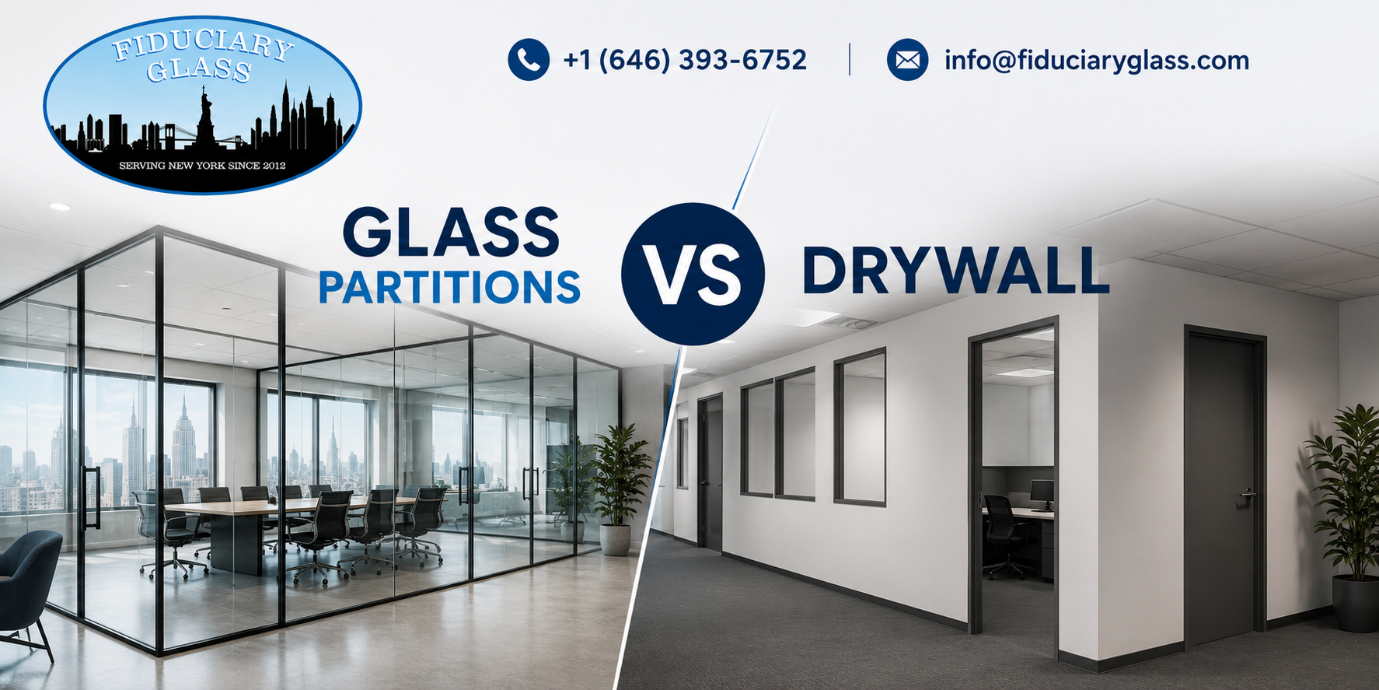
Quick Overview: This blog explains the difference between glass partitions and drywall for office spaces. It covers privacy, lighting, cost, and productivity impact in simple terms. You will learn how modern offices use both options together for a better balance. It also explores storefront glass ideas and how Fiduciary Glass supports smart, functional workspace design.
Office design has changed fast. Around 80% of employees say workspace layout directly impacts productivity. That means walls are no longer just “walls” anymore. They influence focus, mood, comfort, and even teamwork. This is where the real debate begins: glass partitions or solid barriers. Each option changes how a workspace feels and functions.
Let’s break it down in simple, easy terms so you can clearly understand what fits your office needs better and supports better daily performance.
Open Feel Or Full Privacy? The Real Question
A drywall partition wall is the classic choice. It gives full privacy, blocks sound better, and creates a solid, closed workspace. On the other side, glass brings a more open and modern vibe.
Now here’s where businesses get stuck. Do you want quiet rooms or open collaboration zones? Many offices today mix both styles to balance focus and flow. Fiduciary Glass helps businesses design spaces that feel open but still practical, using smart glass setups that don’t make offices feel boxed in.
Glass Brings Light, Drywall Brings Silence
Drywall walls are strong when it comes to noise control. That’s why meeting rooms often still use them. But they can make offices feel tight and closed. Glass changes that. Natural light moves freely, making the space look bigger and cleaner. That’s why many companies now prefer a frameless office glass partition instead of full solid walls.
A conference room glass partition is especially popular in modern offices because it keeps visibility high while still separating spaces. It also helps teams stay visually connected without losing focus.
Modern Office Setups Are Shifting Fast
Today’s workplaces are not just about desks. They are about experience. Open layouts with flexible zones are becoming the norm. That’s why many offices now use office partitions with glass to divide departments without killing the open feel. It gives structure without making the space feel heavy or closed in.
In contrast, full drywall still works for areas that need privacy, like HR cabins or storage rooms. So it’s not about one winning over the other. It’s about smart mixing.
Where Storefront Style Thinking Comes In
Office design often takes cues from retail spaces. For example, glass storefront vs traditional storefront: which is better for businesses? is a debate many architects already use as inspiration for interiors, too.
Modern offices now also invest in commercial storefront glass because it creates a clean, premium look from the outside. Add storefront glass installation, and businesses instantly upgrade their brand presence without saying a word. Glass is no longer just a design element. It’s a branding tool.
Maintenance, Cost, And Long-Term Value
Drywall is usually cheaper at the start. It is easy to install and repair. But changes later can get messy and costly. Glass costs more upfront but stays flexible. You can redesign layouts without tearing everything down. That’s a big win for growing companies.
Even outside offices, glass solutions are expanding. Think about sliding shower glass doors—they show how glass is now preferred for clean design and easy maintenance across spaces, not just offices.
So, Which One Should You Pick?
If your office needs strong silence and full privacy, a drywall setup still plays an important role. It helps create focused zones where work can happen without distractions. But if your priority is natural light, openness, and a modern vibe, glass solutions clearly stand out.
Most smart office designs today do not rely on just one option. They combine both. Solid walls for private spaces, and glass for collaboration areas. This balance creates a workspace that feels practical, flexible, and more productive for everyday work.
Rethinking Walls In Modern Workspaces
There is no one-size answer. A drywall partition wall gives control and quiet. Glass brings light and connection. The best offices today mix both based on function, not trend. If your goal is a space that feels open, modern, and flexible, glass will always have the edge. But when privacy matters most, drywall still holds its ground strong.
Fiduciary Glass brings that modern edge with smart glass solutions built for real office flow. From planning to storefront glass installation, everything is handled with clean execution and sharp detail. The result? Offices that look fresh, feel open, and work better day after day without unnecessary clutter.
FAQs
1. What is better for offices, glass partitions or drywall?
Glass partitions create open, modern spaces with natural light, while drywall provides privacy and sound control. Most offices use a mix of both.
2. Are glass partitions good for conference rooms?
Yes, a conference room glass partition improves visibility, natural light, and collaboration while still separating space, making meetings feel more open and modern.
3. What is a frameless office glass partition?
A frameless office glass partition is a sleek, modern glass wall without visible frames, offering clean design, transparency, and a premium office look.
4. Does Fiduciary Glass offer office glass solutions?
Yes, Fiduciary Glass provides custom office glass solutions including partitions, installations, and storefront glass services designed for modern commercial spaces.
5. When should I choose drywall partitions over glass?
Choose drywall partitions when privacy, sound control, and separation are priorities, such as HR rooms, executive cabins, and areas requiring focused, distraction-free work environments.








Leave a Reply